
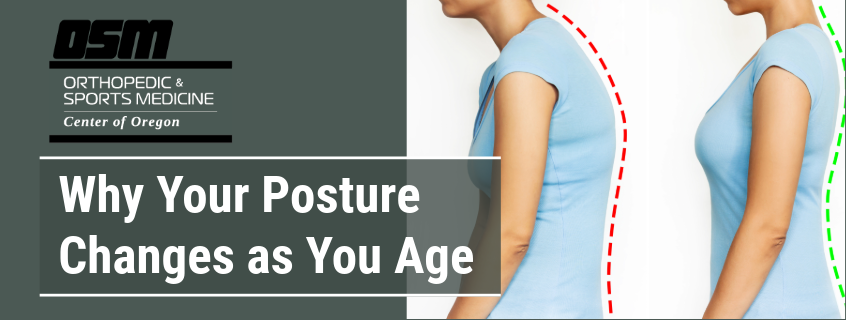
Why Your Posture Changes as You Age
Article featured on IGEA Brain, Spine, Pain & Orthopedics
You might first notice it in a photograph, catching your reflection in a store window, or during a routine physical when the nurse measures your height and tells you that you are an inch shorter than you were a decade ago.
A gradual shift in posture—often resulting in a forward-leaning head, rounded shoulders, and a loss of overall height—is one of the most universally recognized signs of aging. For a long time, society accepted this progressive stoop as an unavoidable fact of life.
However, your posture does not change simply because the calendar pages are turning. It changes because of highly specific, treatable biomechanical shifts happening deep within your musculoskeletal system.
At IGEA Brain, Spine, Pain & Orthopedics, our specialists focus heavily on the structural alignment of the human body. Understanding exactly why your spine changes shape over time is the key to preventing chronic pain, protecting your balance, and preserving your active independence. Here is a look at the structural science behind why we shrink and slouch as we age, and what can be done to stop it.
1. The Discs Dry Out (Loss of Shock Absorption)
Your spine is composed of stacked bony vertebrae separated by rubbery, fluid-filled cushions called intervertebral discs. In your youth, these discs are plump and heavily hydrated, keeping your spine tall, flexible, and perfectly spaced.
As you age, a natural process called Degenerative Disc Disease (DDD) occurs. The discs slowly lose their ability to retain water. Like a sponge left out in the sun, they begin to dry out, flatten, and shrink.
Because the discs in the front of your spine bear the majority of your body weight, they tend to compress faster than the back of the discs. As these cushions flatten unevenly, the spinal column naturally begins to pitch forward, resulting in a progressive hunch.
2. Sarcopenia: The Rigging Weakens
Your spine is a brilliant architectural column, but it cannot stand up on its own. It relies entirely on a complex network of muscles—specifically your core and your back extensor muscles—to pull it upright against the constant force of gravity.
Starting around age 30, the human body begins to naturally lose muscle mass and strength, a condition known as sarcopenia. If you are not actively engaging in resistance training, the deep muscles that support your spine gradually atrophy. As the “rigging” holding your spine weakens, gravity wins the tug-of-war, pulling your shoulders forward and your chest downward.
3. Osteoporosis and Micro-Fractures
Bone density peaks in our late twenties and begins to slowly decline as we age. For many, particularly post-menopausal women, this decline can accelerate into osteoporosis, a disease that makes bones brittle and porous.
When the vertebrae become weak, the everyday mechanical stress of lifting, bending, or even coughing can cause the front edges of the spinal bones to collapse slightly. These are known as compression fractures. Instead of looking like a perfect block, the vertebra becomes wedge-shaped. When multiple vertebrae become wedged, it creates a severe, rigid forward curve in the upper back known as hyperkyphosis (often referred to as a “Dowager’s hump”).
4. Connective Tissue Stiffness
Ligaments are the strong bands of tissue that connect your bones together, while tendons attach your muscles to those bones. In our younger years, these tissues are highly elastic. As we age, they lose water content and begin to calcify, becoming rigid and stiff.
If you have spent decades working at a desk or staring down at a phone with poor posture, your ligaments will eventually adapt to that shape. As the tissue stiffens with age, it essentially “locks” your spine into that forward-leaning position, making it incredibly difficult and painful to force yourself to stand up straight.
The Ripple Effect: Beyond Cosmetics
A progressive forward hunch is not just a cosmetic issue; it is a profound threat to your overall health. When your spine curves forward drastically, it shifts your center of gravity and significantly increases your risk of dangerous falls. Furthermore, a collapsed posture physically compresses your chest and abdominal cavities, which can reduce your lung capacity, trigger acid reflux, and impair healthy digestion.
Restoring Alignment and Relieving Pain at IGEA
While we cannot stop the biological clock, you do not have to surrender to gravity and chronic pain. Severe postural decline and the resulting nerve compression or muscle spasms are highly treatable structural conditions.
At IGEA Brain, Spine, Pain & Orthopedics, our multidisciplinary team evaluates your spine to find the exact mechanical bottlenecks driving your postural changes:
- Advanced Diagnostics: We use high-resolution imaging to evaluate your bone density, disc height, and spinal alignment, determining if your posture is driven by muscle weakness, disc collapse, or hidden compression fractures.
- Interventional Pain Management: When poor posture forces your muscles into chronic spasms or causes inflamed joints, our specialists provide targeted, image-guided treatments—such as facet joint blocks or epidural injections—to extinguish the chemical inflammation and restore comfortable movement rapidly.
- Minimally Invasive Structural Repair: If advanced degeneration has resulted in a bone spur or a collapsed disc actively pinching a nerve root, or if a severe compression fracture requires stabilization, our world-class surgical team offers advanced, tissue-sparing procedures. By restoring the structural integrity of the spinal column, we relieve the pressure and create a solid foundation for better alignment.
Reclaim Your Strength and Stability
If you are experiencing progressive changes in your posture accompanied by chronic back pain, stiffness, or a loss of balance, your body is asking for structural support.

