
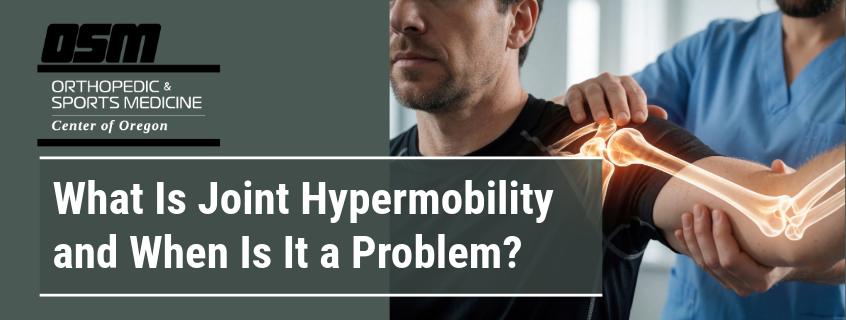
What Is Joint Hypermobility and When Is It a Problem?
in Joint PainArticle featured on NHS Inform
Joint hypermobility means that some or all of a person’s joints have an unusually large range of movement.
People with hypermobility are very supple. This means they’re able to move their limbs into positions others find impossible.
Some people also refer to this as having loose joints or being double-jointed.
Symptoms of joint hypermobility
Many people with hypermobile joints don’t have any problems. For some people, the extra flexibility may be a benefit. For example, ballet dancers or gymnasts.
But some people with joint hypermobility can have symptoms like:
- pain and stiffness in the joints and muscles
- clicking joints
- joints that dislocate (come out of the correct position) easily
- fatigue (extreme tiredness)
- recurrent injuries – like sprains
- digestive problems – like constipation and irritable bowel syndrome (IBS)
- dizziness and fainting
- thin or stretchy skin
If you have these symptoms with hypermobility, this could be a sign of:
- hypermobile Ehlers-Danlos Syndrome (hEDS)
- Hypermobility Spectrum Disorder (HSD)
A person with hEDS or HSD may also have some other symptoms related to stretchiness in the connective tissues throughout their body. The severity can differ from one person to another.
Digestive system problems
hEDS or HSD can cause symptoms that affect your digestive system. This is because the connective tissue within your digestive system is more stretchy. This makes squeezing food either more difficult or quicker causing a range of problems including:
- gastro-oesophageal reflux disease (GORD)
- gastroparesis – where the stomach has difficulty emptying its contents into the small bowel which can cause bloating and nausea
- constipation
- irritable bowel syndrome (IBS)
Postural orthostatic tachycardia syndrome (POTS)
hEDS or HSD can also cause abnormalities in the part of your nervous system that controls bodily functions you do not actively think about. These are things like your heart beating. This is known as your autonomic nervous system.
These abnormalities can cause problems when you stand up or sit in the same position for a while. Your blood pressure can drop to low levels, making you feel sick, dizzy and sweaty. You may also faint.
In some people, these abnormalities can lead to postural orthostatic tachycardia syndrome (POTS). POTS causes your pulse rate to increase rapidly within a few minutes of standing up. You may also experience:
- dizziness or fainting
- headaches
- tummy upsets
- sweating
- a sensation of anxiety
- purple puffy fingers and feet
- a pounding or fluttering heart beat (heart palpitations)
Other problems
People with hEDS or HSD may have other related conditions and further symptoms, including:
- stress incontinence – when urine leaks out when your bladder is under pressure
- hernias – where an internal part of the body, like an organ, pushes through a weakness in the muscle or surrounding tissue wall
- in women, pelvic organ prolapse – where the organs inside the pelvis slip down from their normal position
- varicose veins – swollen and enlarged veins, usually blue or dark purple
- flat feet – where the inner part of your feet (the arch) is not raised off the ground when you stand
- headaches
- drooping eyelids
- a tendency to bruise easily and develop stretch marks
- thin or stretchy skin
Diagnosing joint hypermobility
Your healthcare professional may use the Beighton score if they think you have joint hypermobility. This score can be used as a quick test to assess the range of movement in some of your joints.
But this cannot be used to confirm a diagnosis, because it’s important to look at all the joints and take into account a person’s symptoms. The Beighton score does not include all the joints, for example, shoulders and hips.
Your healthcare professional may also carry out blood tests and X-rays to rule out other conditions linked with joint pain, like rheumatoid arthritis.
The Beighton score
The Beighton score consists of a series of 5 tests, the results of which can add up to a total of 9 points.
The score is worked out as follows:
- 1 point if you can place your palms on the ground while standing with your legs straight
- 1 point for each elbow that bends backwards
- 1 point for each knee that bends backwards
- 1 point for each thumb that touches the forearm when bent backwards
- 1 point for each little finger that bends backwards beyond 90 degrees
If your Beighton score is 4 or more, it’s likely that you have joint hypermobility.
A person with hEDS or HSD may also have a number of other symptoms related to weaknesses in the connective tissues throughout their body.
Causes of joint hypermobility
Joint hypermobility is often hereditary (runs in families). One of the main causes is thought to be linked to changes in a type of protein called collagen.
Collagen is found throughout the body. For example, it’s found in:
- skin
- ligaments (the tough bands of connective tissue that link 2 bones together at a joint)
If collagen is more stretchy and lax than it should be, then the ligaments, tendons, and muscles around the joints allow a greater range of movement. This means they also sometimes cannot keep the joints stable.
There is no genetic test currently available for hEDS or HSD. It’s likely that more than one gene is involved. There are genetic tests for rarer forms of EDS.
Treating joint hypermobility
You won’t need treatment for your joint hypermobility if it doesn’t cause any problems.
But you may need treatment and support if you have hEDS or HSD. These can cause a wide range of symptoms, including joint pain and digestive problems.
Things you can do
If you’re experiencing symptoms, there are some things you can do yourself that can help. These include:
- eating a healthy diet and maintaining a healthy weight, which can help improve your joint strength, reducing the strain on them
- trying to have a good sleep routine (sleep hygiene)
- staying as active as you can, but sticking to low-impact exercises, like swimming, cycling, Pilates or tai chi to reduce strain on your joints.
- wearing comfortable and supportive footwear to support your ankles
- using heat or ice can be a helpful pain treatment
Our information on soft tissue injury can help your recovery if you have an injury to your soft tissues such as your muscles, tendons, joints or ligaments
If doing exercises that have a specific focus on increasing flexibility such as yoga, be careful not to overstretch hypermobile areas.
If you’re struggling with any of your symptoms, you should contact your healthcare professional.
Physiotherapy and exercise
Physiotherapy can help people with hypermobile joints in many ways. For example, it may help to:
- reduce pain
- improve muscle strength and fitness
- improve posture
- improve your sense of your body’s position and movement (proprioception)
- correct the movement of individual joints
It’s helpful to have a physiotherapist with knowledge of hEDS or HSD, as some physiotherapy treatments can make symptoms worse.
A wide range of physiotherapy techniques can be used. You may be advised to follow an exercise programme that includes:
- strength and balance training
- special stretching techniques
- advice about pacing
Pacing involves balancing periods of activity with periods of rest. It means not overdoing it or pushing yourself beyond your limits. If you do push yourself too hard, you could slow your long-term progress.
Occupational therapy
Occupational therapy aims to help you overcome difficulties in your everyday life caused by having hEDS or HSD.
This may involve teaching you alternative ways of carrying out a certain task. For example, an occupational therapist can give you advice about:
- reducing the strain on your joints while using a computer
- getting dressed
- suggest ways to adapt your home to make moving around easier like if using stairs is a problem
You may also be able to get equipment to make some tasks easier. For example, special grips can make holding a pen easier and help improve handwriting.
Podiatry
Flat feet can be a problem for some people with hEDS or HSD. Flat feet is where someone has no arch in the inner part of their feet. This can put a strain on nearby muscles and ligaments (tissue that connects bones together at a joint).
If you have problems with your feet, a podiatrist (a foot specialist) can recommend footwear for both indoors and outdoors. These will support the foot arches and can help with foot, knee, hip and back pain. They can recommend footwear and insoles if necessary.
Pain management
If painkillers are not helping to reduce your pain, you may benefit from being referred to a pain specialist at a pain clinic. Staff at the clinic will be able to provide further advice and treatment.
For example, some people with hEDS or HSD benefit from cognitive behavioural therapy (CBT). CBT is a pain management programme that may help when painkillers are not working.
Pain specialists may also give you stronger medication used to treat nerve (neuropathic) pain. These drugs should only be continued if there are clear benefits.
This type of pain is often called chronic pain.
The Orthopedic & Sports Medicine Center of Oregon
The Orthopedic & Sports Medicine Center of Oregon (OSM) is an award-winning, board-certified orthopedic and sports medicine practice serving Lake Oswego, Portland, Scappoose, and surrounding Oregon communities. Our main clinic is located in Lake Oswego, with additional locations in Portland and Scappoose.
OSM provides comprehensive orthopedic care, sports medicine, spine care, joint replacement, foot and ankle surgery, hand and upper extremity care, and fracture treatment. Our physicians treat a wide range of conditions including sports injuries, arthritis, joint pain, spine conditions, ligament and tendon injuries, fractures, and degenerative musculoskeletal disorders using both surgical and nonsurgical approaches.
Our mission is to help patients return to pain-free movement, strength, and function through personalized treatment plans and advanced orthopedic techniques.
OSM Locations
Lake Oswego (Main Clinic)
17355 Lower Boones Ferry Rd, Suite 100A
Lake Oswego, OR 97035
Portland
5050 NE Hoyt St, Suite 668
Portland, OR 97213
Scappoose
51385 SW Old Portland Rd, Suite A
Scappoose, OR 97056
Phone: 503-224-8399
Hours: Mon–Thurs, 8:00am–4:30pm/ Friday 8:00am–1:00pm
If you are looking for experienced orthopedic surgeons, sports medicine specialists, spine doctors, or foot and ankle experts in Lake Oswego, Portland, or Scappoose, contact The Orthopedic & Sports Medicine Center of Oregon today.

