
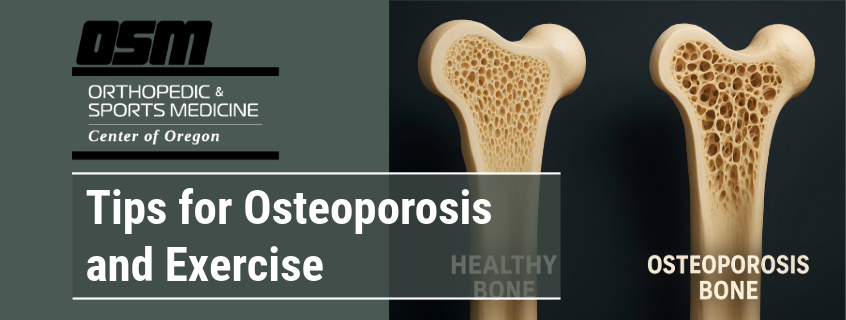
Tips for Osteoporosis and Exercise
Article featured on OrthoCarolina
You’ve been given the diagnosis of Osteoporosis and your doctor wants you to do weight bearing activities to improve your bone health.
But what does that mean exactly? How much and how often should you do these activities? Do you need special equipment or can you safely do them in the comfort of your own home?
Weight-bearing exercises and activities are those that make you move against gravity while staying upright. Research shows that high impact dynamic loading such as jumping, jogging/running, jumping rope or hiking (activities where the feet leave the ground) gives the best results in building bone. Depending on your fitness level and overall health including joint health, you may need to stick to low impact exercises such as cycling, elliptical machine or slow paced walking.
Muscle strengthening exercises include activities that you do to move your body against resistance. One can choose from free weight, resistance bands, weight machines or even using the resistance of your own body. A well balanced program will include exercises for all body parts. Be sure to include specific exercises to strengthen the spine and promote good posture. See examples below:
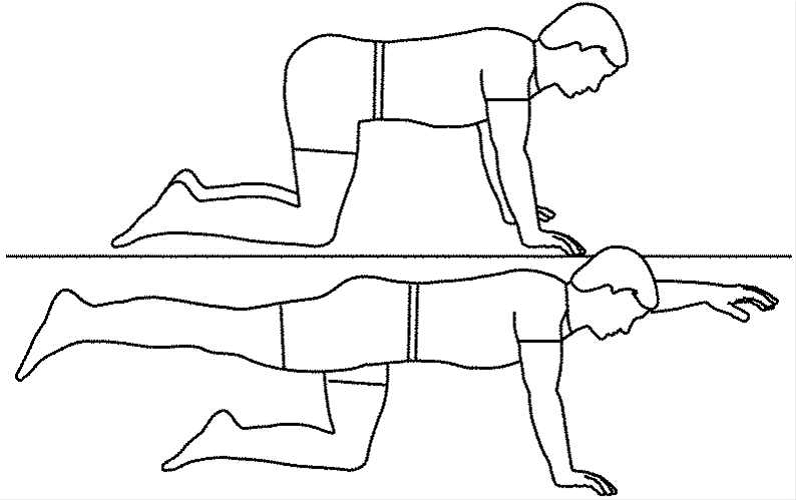
Bird Dog
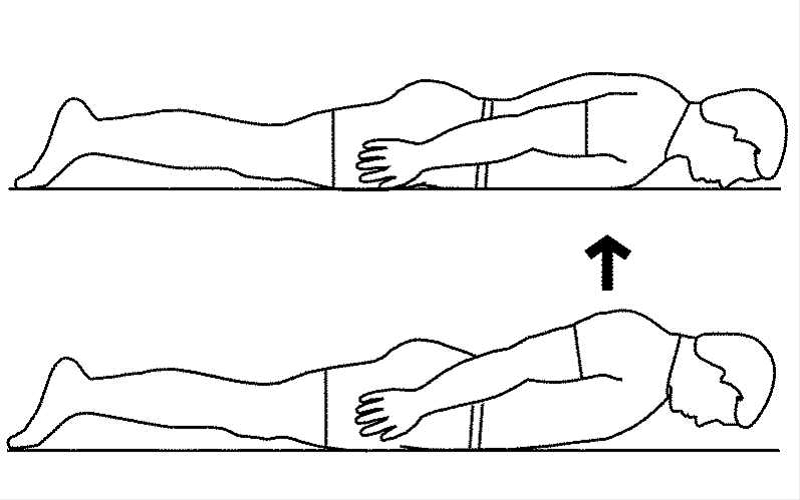
Back Ups
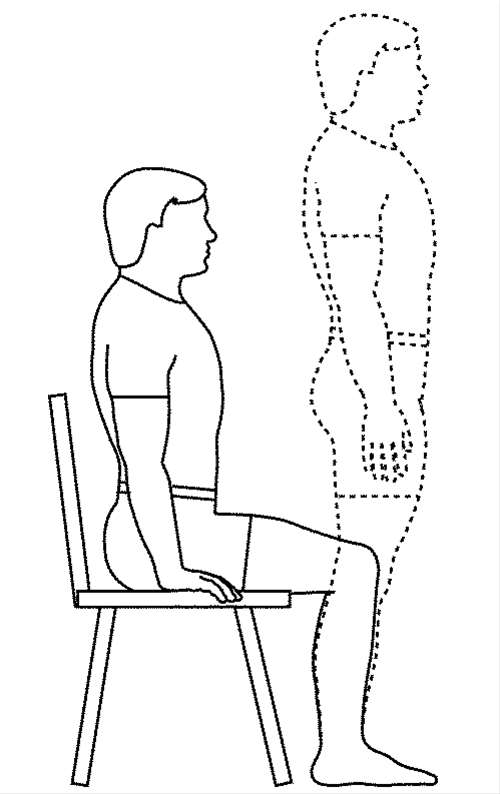
Sit to Stand
**Great care should be taken to avoid curl-ups and spine twisting motions when you have active osteoporosis as these motions can cause a spinal fracture. **
Balance Exercises are essential in the prevention of falls and therefore the prevention of injuries/fractures incurred. We can improve our balance even as we age by combining strengthening of the lower extremities with balancing exercises. Balance on one leg beginning with the eyes open and progressing to eyes closed either on level surface or foam pad.
Single leg balance (Image Above)
Now that you have an idea of what to do, how often should you do it?
For weight bearing and balance activities, research indicates participating in these activities 5-7 days a week.
For strengthening exercises, the research indicates 3 days a week to improve bone health.
Once cleared by your physician of any active fractures, your physical therapist can assist you with developing a program that is safe and effective for you depending on your current fitness level and general health.
The Orthopedic & Sports Medicine Center of Oregon
The Orthopedic & Sports Medicine Center of Oregon (OSM) is an award-winning, board-certified orthopedic and sports medicine practice serving Lake Oswego, Portland, Scappoose, and surrounding Oregon communities. Our main clinic is located in Lake Oswego, with additional locations in Portland and Scappoose.
OSM provides comprehensive orthopedic care, sports medicine, spine care, joint replacement, foot and ankle surgery, hand and upper extremity care, and fracture treatment. Our physicians treat a wide range of conditions including sports injuries, arthritis, joint pain, spine conditions, ligament and tendon injuries, fractures, and degenerative musculoskeletal disorders using both surgical and nonsurgical approaches.
Our mission is to help patients return to pain-free movement, strength, and function through personalized treatment plans and advanced orthopedic techniques.
OSM Locations
Lake Oswego (Main Clinic)
17355 Lower Boones Ferry Rd, Suite 100A
Lake Oswego, OR 97035
Portland
5050 NE Hoyt St, Suite 668
Portland, OR 97213
Scappoose
51385 SW Old Portland Rd, Suite A
Scappoose, OR 97056
Phone: 503-224-8399
Hours: Mon–Thurs, 8:00am–4:30pm/ Friday 8:00am–1:00pm
If you are looking for experienced orthopedic surgeons, sports medicine specialists, spine doctors, or foot and ankle experts in Lake Oswego, Portland, or Scappoose, contact The Orthopedic & Sports Medicine Center of Oregon today.

