
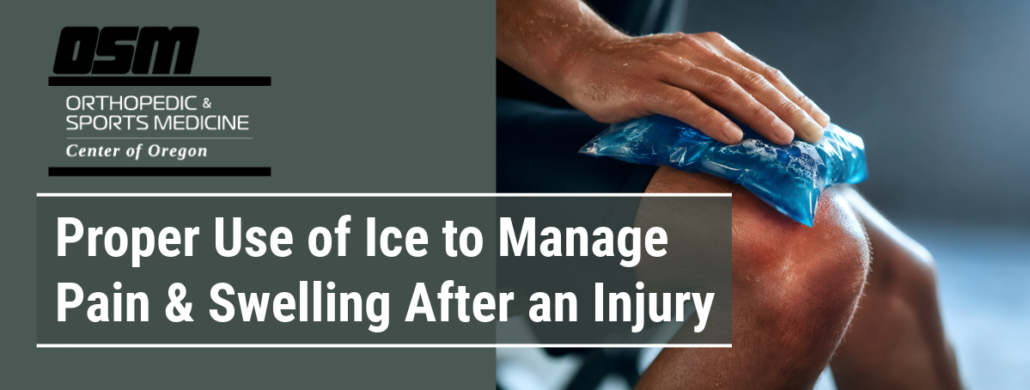
Proper Use of Ice to Manage Pain and Swelling After an Injury
Article featured on Northfield Hospitals & Clinics
When it comes to managing an injury, icing is one of the simplest and most effective tools to reduce pain, swelling, and inflammation, especially within the first 48–72 hours after an injury. Here’s how to ice properly:
Step 1: Choose the Right Type of Ice Pack
You can use a store-bought gel pack, a bag of frozen peas, or a DIY ice pack (crushed ice in a plastic bag). Whatever you choose, wrap it in a thin towel or cloth to protect your skin. Direct contact with ice can cause frostbite or irritation.
Step 2: Apply Ice at the Right Time
Ice is most beneficial immediately after an injury or activity that aggravates the area. It works best for sprains, strains, or bruises. Avoid using ice for extended periods weeks after the injury unless your symptoms flare up.
Step 3: Position and Apply
- Elevate the injured area: If possible, position the injured body part above the level of your heart. This helps reduce swelling through gravity.
- Apply the ice: Place the wrapped ice pack directly over the injured area. Be sure the cloth is snug but not so tight it restricts circulation.
Step 4: Timing is Key
- Apply the ice pack for 15–20 minutes at a time. Anything longer can actually increase swelling or harm the tissues.
- Wait at least 1–2 hours between applications, and aim to ice the area about 3–4 times a day for the first few days.
Step 5: Monitor for Skin Reaction
Check your skin every few minutes during the icing session. If you notice redness, numbness, or a burning sensation, remove the ice immediately and let your skin return to normal temperature before trying again.
When Not to Ice
While ice is excellent for acute injuries, it’s not ideal for every situation. Avoid icing:
- Before physical activity: This could stiffen your muscles and reduce performance.
- For chronic pain or stiffness: In these cases, heat therapy might be a better option to relax tight muscles or improve blood flow.
- If you have circulation issues: Conditions like Raynaud’s disease or diabetes might make icing unsafe, so consult a healthcare provider first.
Remember, icing is just one piece of the recovery puzzle. If your pain or swelling doesn’t improve after a few days, it’s a good idea to follow up with your NH+C healthcare provider to see if you could benefit from physical therapy.
