
Specialized orthopedic shoulder care • Lake Oswego, Oregon
Shoulder Specialist in Lake Oswego
Evaluation and treatment for shoulder pain, weakness, stiffness, instability and injury, with care shaped around your diagnosis, activity and goals.
Care begins with understanding the shoulder
The same symptom can have different causes.
Shoulder pain may involve tendons, muscles, cartilage, ligaments, bone or the joint itself. A careful evaluation helps identify the source of the problem before treatment is selected.
At OSM, your physician will consider your symptoms, examination, imaging when appropriate, activity level and goals. Treatment may include nonsurgical care or surgery depending on the diagnosis and your individual needs.
Identify
Determine which shoulder structures may be contributing to pain, weakness, stiffness or instability.
Consider options
Review appropriate nonsurgical and surgical pathways in the context of your diagnosis, health and goals.
Restore function
Develop a thoughtful plan for recovery and a return toward work, recreation, sport and daily activity.
Conditions we evaluate and treat
Shoulder conditions across every stage of activity
Shoulder problems may develop after an injury, through repetitive use or as the joint changes over time. Your care will focus on the specific diagnosis.
Tendon & impingement
Pain, weakness and overhead motion
- Rotator cuff tears
- Subacromial impingement
- Calcific tendonitis
- Biceps tendonitis
- Proximal biceps injuries
Labrum & instability
Stability and joint control
- Labral tears
- SLAP tears
- Shoulder dislocations
- Multidirectional instability
- Recurrent shoulder instability
Arthritis & stiffness
Motion, comfort and joint function
- Shoulder arthritis
- AC joint arthritis
- Frozen shoulder
- Loss of range of motion
- Pain with daily activities
Fracture & trauma
Care after a shoulder injury
- AC joint injuries and separation
- Clavicle fractures
- Proximal humerus fractures
- Shoulder dislocation
- Traumatic tendon injuries
Shoulder treatment pathways
Care matched to the condition and the patient
Shoulder treatment is individualized. Surgery is one option, not the starting assumption, and is considered when it is appropriate for the diagnosis and the patient.
Nonsurgical care
Many shoulder conditions can be managed without surgery. Recommendations depend on the diagnosis, symptom severity, function and goals.
- Activity modification
- Medication guidance
- Physical therapy and rehabilitation
- Ultrasound-guided injections
- Calcific tendonitis lavage
- Steroid injections when appropriate
Surgical care
When surgery is recommended, your physician will explain the procedure, alternatives and expected rehabilitation considerations for your situation.
- Shoulder arthroscopy
- Labral repair and stabilization
- Rotator cuff repair
- Biceps tenodesis
- AC joint reconstruction and fracture fixation
- Anatomic, reverse and revision shoulder replacement
A consultation does not predetermine a treatment. It is an opportunity to understand the problem, review options and make an informed decision with your physician.
Featured shoulder physicians
Shoulder expertise across a broad range of conditions
Dr. Lamprecht and Dr. Petit provide shoulder care ranging from sports injuries and arthroscopy to complex reconstruction and joint replacement.
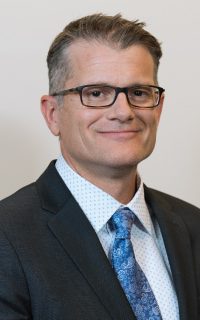
Board-Certified Orthopedic Surgeon
Derek E. Lamprecht, DO
Assistant Orthopedic Team Physician for the Portland Trail Blazers
Shoulder Care Focus: Arthroscopy • Reconstruction • Joint Replacement
Fellowship-trained in sports medicine, Dr. Lamprecht provides arthroscopic and complex reconstructive shoulder surgery as well as anatomic and reverse shoulder replacement.
View Dr. Lamprecht’s profile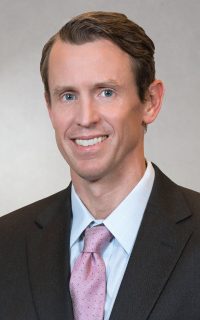
Board-Certified Orthopedic Surgeon
Charles J. Petit, MD
Head Orthopedic Team Physician for the Portland Trail Blazers
Shoulder Care Focus: Arthroscopy • Reconstruction • Joint Replacement
Fellowship-trained in sports medicine and shoulder arthroscopy, Dr. Petit treats rotator cuff, labral, instability and arthritic shoulder conditions and provides complex shoulder reconstruction.
View Dr. Petit’s profileMovement matters differently to everyone.
Shoulder care should reflect how you use your shoulder.
An overhead athlete, a patient with arthritis and someone recovering from a fall may share a symptom but have very different needs. OSM develops an individualized plan around the diagnosis, function, health and activities that matter to each patient.
Common questions
About shoulder care at OSM
When should I see an orthopedic shoulder specialist?
Does shoulder care always involve surgery?
What shoulder conditions does OSM treat?
Will I need imaging?
Which OSM physicians provide shoulder care?
How do I request an appointment?
Move better. Live better.
Start with a careful shoulder evaluation.
Request an appointment with OSM or call the office. The team can help connect you with a provider suited to your shoulder concern.
If you are experiencing a medical emergency, call 911 or seek immediate emergency care. Information on this page is educational and does not replace an evaluation by a qualified healthcare professional.