
Hand Arthritis Symptoms and Treatment

Article featured on Orthopaedic Specialists

Hand arthritis can significantly impact your ability to perform daily tasks and enjoy your favorite activities. The pain, stiffness, and limited mobility associated with this condition can be debilitating. However, seeking the right hand arthritis treatment can help you regain control over your body and improve your quality of life.

Symptoms of Hand Arthritis

Hand arthritis symptoms can vary depending on severity and the type of arthritis. However, some common symptoms can help identify the condition early and seek treatment before it worsens. Seek out a specialists if experience any of the following symptoms to a debilitating degree or for an extended period of time:

  1. Pain and Tenderness: Pain is often felt in the joints of the hands, especially after repetitive movements. The pain can range from mild to severe and may worsen with physical activity.
  2. Stiffness: Stiffness in the hands is common, particularly after resting or in the morning. This stiffness can make it difficult to open jars, grip objects, or perform simple tasks like buttoning a shirt or tying your shoes.
  3. Swelling: Swelling in the hands or fingers can occur, particularly around the joints. This can lead to discomfort and restricted movement.
  4. Decreased Range of Motion: Over time, the range of motion in the affected hand joints can become limited. This can impact your ability to carry out everyday tasks and may make it difficult to fully straighten or bend your fingers.
  5. Formation of Bumps or Deformities: In advanced cases, bone spurs may develop around the joints, leading to the formation of lumps or visible deformities. These can make the hands look misshapen or swollen.
  6. Grinding Sensation: You may experience a sensation of grinding or crunching in your fingers or hands as the cartilage breaks down in the affected joints.

Hand Arthritis Treatment

Hand arthritis can be a debilitating condition to live with. Our hands play such a large role in our lives, and without full movement, we may feel helpless. Activities that require a steady hand or precise movements become much more difficult. Hobbies that we once enjoyed become painful. However, with modern medicine, there are ways to treat this condition. Perhaps a cure is still on its way to being found, but pain management methods have proven to be effective with certain types of arthritis.

1. Medications

The first line of treatment for hand arthritis often involves medications to help reduce pain and inflammation. Over-the-counter (OTC) pain relievers like ibuprofen and acetaminophen can help manage mild to moderate pain. In cases of more severe inflammation, prescription medications, such as corticosteroids, or disease-modifying anti-rheumatic drugs (DMARDs) for conditions like rheumatoid arthritis may be utilized.

2. Physical and Occupational Therapy

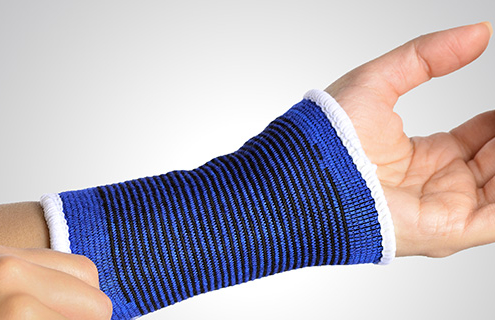
Physical and occupational therapy can play a critical role in improving hand function. A physical therapist can help strengthen the muscles around the joints and improve flexibility, while an occupational therapist can teach you techniques to perform daily tasks more easily and reduce stress on the affected joints. Splints and custom braces may also be used to protect your hands and prevent further damage.

3. Injections

Corticosteroid injections can provide temporary relief from pain and inflammation. These injections are typically administered directly into the affected joint. While they can be highly effective, they are not a long-term solution and may be used as part of a comprehensive treatment plan.

4. Surgery

If conservative treatments fail to alleviate the symptoms, surgery may be necessary. There are different surgical options available depending on the severity of the arthritis and the specific joints involved:

  • Joint Fusion: This procedure involves fusing two bones together to eliminate movement and relieve pain in the affected joint. It is most commonly used for severe cases of osteoarthritis.
  • Joint Replacement: In cases where the joint is severely damaged, a joint replacement may be recommended. The damaged joint is replaced with a prosthetic joint, helping restore function and alleviate pain.

5. Lifestyle Modifications

Making certain lifestyle changes can also help manage arthritis symptoms. These may include maintaining a healthy weight, which reduces stress on the joints, and avoiding repetitive hand movements that may aggravate the condition. Regular low-impact exercise can improve flexibility and strengthen muscles to support the affected joints.

6. Alternative Therapies

Alternative treatments such as acupuncture, massage, or the use of hot or cold therapy may provide additional relief for some individuals with hand arthritis. Consult with your doctor before pursuing these therapies to ensure they are safe and effective for your specific condition.


The Orthopedic & Sports Medicine Center of Oregon

The Orthopedic & Sports Medicine Center of Oregon (OSM) is an award-winning, board-certified orthopedic and sports medicine practice serving Lake Oswego, Portland, Scappoose, and surrounding Oregon communities. Our main clinic is located in Lake Oswego, with additional locations in Portland and Scappoose.

OSM provides comprehensive orthopedic care, sports medicine, spine care, joint replacement, foot and ankle surgery, hand and upper extremity care, and fracture treatment. Our physicians treat a wide range of conditions including sports injuries, arthritis, joint pain, spine conditions, ligament and tendon injuries, fractures, and degenerative musculoskeletal disorders using both surgical and nonsurgical approaches.

Our mission is to help patients return to pain-free movement, strength, and function through personalized treatment plans and advanced orthopedic techniques.


OSM Locations

Lake Oswego (Main Clinic)
17355 Lower Boones Ferry Rd, Suite 100A
Lake Oswego, OR 97035

Portland
5050 NE Hoyt St, Suite 668
Portland, OR 97213

Scappoose
51385 SW Old Portland Rd, Suite A
Scappoose, OR 97056


Phone: 503-224-8399
Hours: Mon–Thurs, 8:00am–4:30pm/ Friday 8:00am–1:00pm

If you are looking for experienced orthopedic surgeons, sports medicine specialists, spine doctors, or foot and ankle experts in Lake Oswego, Portland, or Scappoose, contact The Orthopedic & Sports Medicine Center of Oregon today.

Common Hand Conditions or Injuries That May Require Surgery


The Orthopedic & Sports Medicine Center of Oregon is an award-winning, board-certified orthopedic group located in downtown Portland Oregon. We utilize both surgical and nonsurgical means to treat musculoskeletal trauma, spine diseases, foot and ankle conditions, sports injuries, degenerative diseases, infections, tumors and congenital disorders.

Our mission is to return our patients back to pain-free mobility and full strength as quickly and painlessly as possible using both surgical and non-surgical orthopedic procedures.

Our expert physicians provide leading-edge, comprehensive care in the diagnosis and treatment of orthopedic conditions, including total joint replacement and sports medicine. We apply the latest state-of-the-art techniques in order to return our patients to their active lifestyle.

If you’re looking for compassionate, expert orthopedic and podiatric surgeons in Portland Oregon, contact OSM today.

Phone:

503-224-8399

Address
17355 Lower Boones Ferry Rd Suite 100A
Lake Oswego, OR 97035

Hours
Monday–Friday
8:00am – 4:30pm


What Is Dupuytren's Disease and How Is It Treated?

What Is Dupuytren’s Disease and How Is It Treated?
Article Featured on Michigan Hand & Wrist

If you begin to notice lumps on the palm side of your hand, then you might just have Dupuytren’s disease, and if left untreated, you could possibly lose motion in your fingers. While Dupuytren’s disease is called a disease, it is actually a genetic condition. You would need to have a physical exam to get tested for it. If you think you may have this disease, you should reach out to a hand specialist to look into treatment options as soon as possible.

Read more

Kienböck's Disease

What Is Kienböck’s Disease?

Kienböck’s disease is a condition where the blood supply to one of the small bones in the wrist, the lunate, is interrupted. Bone is living tissue that requires a regular supply of blood for nourishment. If the blood supply to a bone stops, the bone can die. This is called osteonecrosis.

Damage to the lunate causes a painful, stiff wrist and, over time, can lead to arthritis.

Normal anatomy of the hand and wrist

Normal skeletal anatomy of the hand. The lunate is one of the small bones in the wrist.
Reproduced and modified with permission from JF Sarwark, ed: Essentials of Musculoskeletal Care, ed 4. Rosemont, IL, American Academy of Orthopaedic Surgeons, 2010.

Causes

The cause of Kienböck’s disease is not known. Many people with Kienböck’s disease think they have a sprained wrist at first. They may have experienced some form of trauma to the wrist, such as a fall. This type of trauma can disrupt the blood flow to the lunate.

Some things may put you more at risk for the disease. For example, most people have two vessels that supply blood to the lunate, but in some people there is only one source. This may slow the blood flow to the bone. In addition, if the two bones of the forearm (the radius and ulna) are different lengths, extra pressure can be put on the lunate during some wrist motions. Over time, this extra stress on the bone may lead to Kienböck’s disease.

Symptoms

The most common symptoms of Kienböck’s disease include:

  • A painful and sometimes swollen wrist
  • Limited range of motion in the affected wrist (stiffness)
  • Decreased grip strength in the hand
  • Tenderness directly over the bone (on the top of the hand at about the middle of the wrist)
  • Pain or difficulty in turning the hand upward

Doctor Examination

Kienböck’s disease is a condition that progresses slowly, and many people do not decide to see a doctor until they have lived with symptoms for several months, perhaps longer.

During your first appointment, your doctor will discuss your symptoms and medical history, then examine your hand and wrist. In its early stages, Kienböck’s disease may be difficult for your doctor to diagnose because the symptoms are so similar to those of a sprained wrist. Imaging tests, such as x-rays and magnetic resonance imaging (MRI) scans, are used to confirm a diagnosis of Kienböck’s disease.

Kienböck’s disease progresses through four stages of severity. If you are diagnosed with Kienböck’s disease, your doctor will plan your treatment based on several factors, most importantly, the stage of your progression.

Stage 1

During the first stage of the disease, the symptoms are similar to those of a wrist sprain. Although the blood supply to the lunate has been disrupted, x-rays may still appear normal or suggest a possible fracture. An MRI scan can better detect blood flow and is helpful in making the diagnosis in this early stage.

Kienböck's disease stage 1

Stage 1. An x-ray of a patient’s wrist during Stage I shows no deterioration of the lunate bone.
Reproduced with permission from Allan CH, Joshi A, Lichtman DM: Kienböck’s disease: diagnosis and treatment. J Am Acad Orthop Surg 2001; 9 : 128-136.

Stage 2

The lunate bone begins to harden due to the lack of blood supply during Stage 2. This hardening process is called sclerosis. In addition, the lunate will appear brighter or whiter in areas on x-rays, which indicates that the bone is dying. To better assess the condition of the lunate, your doctor may also order either MRI scans or computed tomography (CT) scans.

The most common symptoms during this stage are wrist pain, swelling, and tenderness.

Kienböck's disease stage 2

Stage 2. (Left) This illustration shows that the lunate has hardened with more than one fracture line. (Right) The lunate is brighter than the surrounding bones, which indicates that the bone is dying.

Reproduced and adapted with permission from Allan CH, Joshi A, Lichtman DM: Kienböck’s disease: diagnosis and treatment. J Am Acad Orthop Surg 2001; 9 : 128-136.

Stage 3

In Stage 3, the dead lunate bone begins to collapse and break into pieces. As the bone begins to break apart, the surrounding bones may begin to shift position.

During this stage, patients typically experience increasing pain, weakness in gripping, and limited wrist motion.
Kienböck's disease stage 3

Stage 3. Both the illustration and x-ray image show that the lunate has begun to collapse and several bones in the wrist have shifted out of position.
Reproduced and adapted with permission from Allan CH, Joshi A, Lichtman DM: Kienböck’s disease: diagnosis and treatment. J Am Acad Orthop Surg 2001; 9 : 128-136.

Stage 4

If the condition progresses to Stage 4, the surfaces of the bones surrounding the lunate also deteriorate, and the wrist may become arthritic.

Kienböck's disease stage 4

Stage 4. (Left) This illustration shows damage to several bones in the wrist. (Right) This CT scan also shows deterioration in the bones of the wrist.
Reproduced and adapted with permission from Allan CH, Joshi A, Lichtman DM: Kienböck’s disease: diagnosis and treatment. J Am Acad Orthop Surg 2001; 9 : 128-136.

Treatment

Although there is no complete cure for Kienböck’s disease, there are several nonsurgical and surgical options for treating it. The goals of treatment are to relieve the pressure on the lunate and to try to restore blood flow within the bone.

Nonsurgical Treatment

In the very early stage of the disease, pain and swelling may be managed with anti-inflammatory medications, such as aspirin or ibuprofen. Immobilizing your wrist for a period of time can help relieve pressure on the lunate, and your doctor may recommend splinting or casting for 2 to 3 weeks.

It is important to monitor any changes in your symptoms during the early stage of Kienböck’s disease. If the pain is not relieved with simple treatments or it returns, your doctor may recommend surgery.

Surgical Treatment

There are several surgical options for treating Kienböck’s disease. The choice of procedure will depend on several factors, in particular how far the disease has progressed. Additional factors to consider are the patient’s activity level, personal goals, and the surgeon’s experience with the procedures.

Revascularization. In some cases, it may be possible to return the blood supply to the lunate bone. This procedure is called revascularization. It is more successful during early phases of the disease — stages 1 and 2 — before the lunate has significantly deteriorated.

Revascularization involves removing a portion of bone with attached blood vessels from another bone — most often a forearm bone (radius) or an adjacent bone in the hand. This piece of bone with its blood supply is called a vascularized graft. It is inserted into the lunate bone.

To help the bones stay in place during healing, an external fixator may be temporarily applied. This is a metal device that is attached to the outside of the wrist with pins that insert into the bones. It can relieve pressure on the lunate while the graft is healing and restoring a blood supply.

Joint leveling. If the two bones of the lower arm are not the same length, a joint leveling procedure may be recommended. Bones can be made longer using bone grafts or shortened by removing a section of the bone. This leveling procedure reduces the forces that compress the lunate and often stops the progression of the disease.

Proximal row carpectomy. If the lunate is severely collapsed or broken into pieces, it can be removed. In this procedure, the two bones on either side of the lunate are also removed. This procedure, called a proximal row carpectomy, will relieve pain while maintaining partial wrist motion.

Wrist before and after proximal row carpectomy

(Left) The three wrist bones that are removed in a proximal row carpectomy, are shaded here. (Right) An x-ray image of a wrist after a proximal row carpectomy.

Fusion. To ease pressure on the lunate, nearby wrist bones can be fused together to make one, solid bone. A fusion can be partial, in which just some of the bones are fused together. This procedure relieves pain and retains some wrist motion.

If the disease has progressed to severe arthritis of the wrist, fusing all of the bones of the wrist to the radius will relieve pain and and improve hand function. Although all wrist motion is eliminated in a complete fusion, forearm rotation is preserved.

Wrist fusion

In a fusion, the bones of the wrist are held together with a plate, screws, and pins.

Outcomes

Kienböck’s disease varies considerably in its severity, as well as its rate of progression. Each patient’s response to treatment depends on the degree of damage to the lunate and surrounding wrist bones. Some patients may require more than one procedure if the disease continues to progress.

In summary, patients with Kienböck’s disease should not expect to ever return to normal wrist function after any treatment. However, treatment gives the greatest opportunity for long-term preservation of function and pain relief.


Orthopedic Sports Medicine Center of Oregon is located in Downtown Portland Oregon. Dr. Dominic Patillo, one of our Board-Certified Orthopedic Surgeons, specializes in hand surgery. His practice focuses on the treatment of both simple and complex hand and upper extremity conditions as well as general orthopaedic trauma. He is experienced with modern microsurgical techniques including nerve and vessel reconstruction.

Common problems treated include:

  • carpal tunnel syndrome
  • tennis elbow
  • wrist pain
  • sports injuries of the hand and wrist
  • fractures of the hand, wrist, and forearm
  • trigger finger

Other problems treated can include arthritis, nerve and tendon injuries, and congenital limb differences (birth defects).

If you have pain in your fingers, hand, wrist or arm, or if you have other upper-extremity related concerns, please consult our hand specialist Dr. Dominic Patillo for a consultation.